


Views: 0 Author: Site Editor Publish Time: 2026-07-28 Origin: Site


The wrong turbine can spin often yet produce disappointing electricity. Site conditions decide whether vertical or horizontal Wind Turbines perform better. Wind direction, tower height, turbulence, maintenance access, and energy demand all change the answer. This guide compares HAWT vs VAWT designs using practical site-selection criteria. You will learn how to estimate output, identify hidden costs, and choose confidently.
Both designs convert moving air into rotor motion, then electricity. However, their shafts face different directions. This difference changes orientation, tower design, component access, and suitable wind conditions. The How Do Wind Turbines Work and their basic aerodynamic operation.
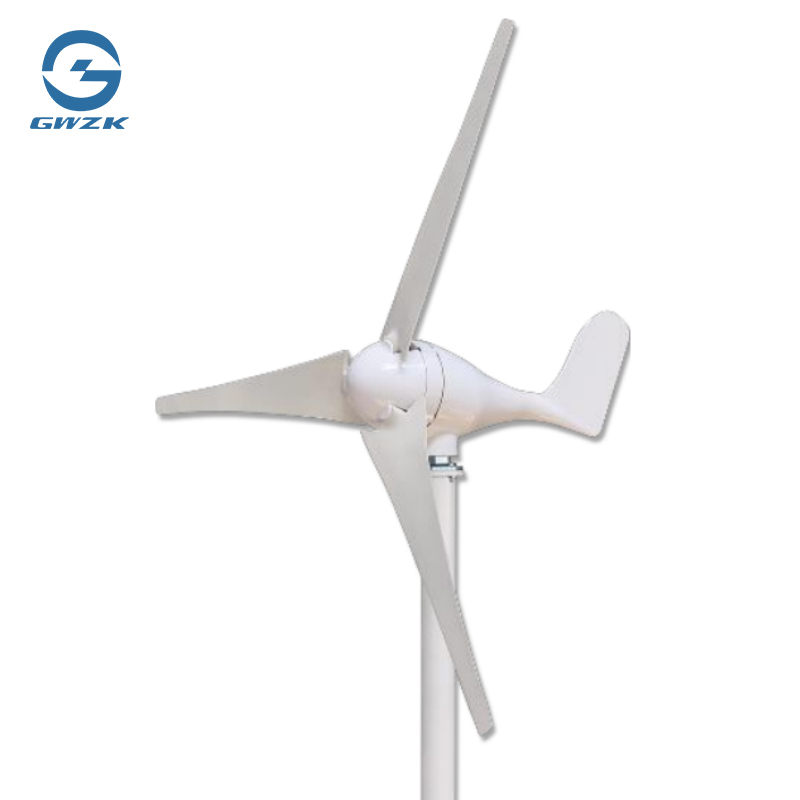
A horizontal axis wind turbine places its rotor shaft parallel to the ground. Most models use three propeller-style blades. A tail vane or active yaw system turns the rotor into the wind. Clean airflow across the full swept area usually supports strong efficiency.
A vertical axis wind turbine places its shaft perpendicular to the ground. Its rotor accepts wind from every horizontal direction. Therefore, it does not need a yaw system. Savonius rotors use drag, while Darrieus and H-rotors mainly use lift.
The mechanism creates practical tradeoffs beyond appearance. Passive yaw systems stay simple, while active yaw adds sensors and motors. Some lift-based VAWTs also need starting assistance. Hybrid rotor designs can improve starting torque, though added parts may increase drag.
Decision factor | Horizontal axis turbine | Vertical axis turbine |
Rotor direction | Parallel to the ground | Perpendicular to the ground |
Wind alignment | Requires passive or active yaw | Accepts wind from any direction |
Typical strength | Higher output in clean, steady wind | Flexible response to shifting direction |
Common limitation | Needs clear airflow and suitable tower height | Usually has lower peak aerodynamic efficiency |
Common applications | Farms, open land, remote sites, larger systems | Constrained sites, distributed systems, changing winds |
Design labels alone never predict actual production. Rotor area, generator efficiency, controls, tower height, and the power curve also matter. Even two equal-rated Wind Turbines may deliver very different annual energy.
GWZK develops HAWT and Vertical Axis Wind Turbine - Innovative Design for distributed-energy applications. Its VAWT range includes 500W, 1kW, and 5kW models. Product pages describe H-shaped rotors, permanent-magnet generators, braking systems, and multidirectional wind capture. These specifications help buyers compare complete systems, not rotor shape alone.
Wind turbine efficiency matters, but available wind matters more. Wind power rises roughly with the cube of wind speed. A modest speed increase can create a large energy gain. Taller towers often reach faster, smoother airflow than short installations.
HAWTs generally lead in open terrain with steady prevailing winds. Their blades maintain favorable aerodynamic angles throughout rotation. Larger swept areas and mature controls also support higher annual output. This combination explains their dominance in utility-scale projects and many rural installations.
VAWTs avoid alignment delays because they accept wind from every direction. This feature helps where direction shifts frequently. However, changing direction often signals turbulence near buildings, trees, or uneven terrain. Turbulence can reduce production and increase structural loading for both designs.
The Small Wind Guidebook reports possible annual-energy reductions of 15% to 25% from turbulence. Therefore, “works in turbulent wind” does not mean turbulence improves performance. An omnidirectional rotor may handle direction changes conveniently, yet it still needs useful wind energy.
Cut-in wind speed creates another common misunderstanding. It only marks the speed where generation begins. Output near cut-in speed may remain very small. Rated wind speed shows when nameplate power becomes available, assuming controlled test conditions.
Annual energy output offers the better comparison. Ask suppliers for a power curve across your expected wind-speed distribution. Then adjust for tower height, air density, turbulence, electrical losses, downtime, and battery or inverter efficiency. This process turns brochure ratings into realistic kilowatt-hours.
Compare equal swept areas whenever possible. A larger rotor may outperform a supposedly more efficient smaller rotor. Also examine self-starting behavior, braking logic, survival wind speed, and generator matching. The best wind turbine for your site delivers dependable annual energy, not the most impressive single rating.
Review how each power curve was measured. Test height, air density, turbulence, and electrical boundaries should be stated. Independent certification makes comparisons more credible. Without comparable test conditions, small efficiency differences may be meaningless.
Installation begins below the rotor. Foundations must resist turbine weight, overturning forces, vibration, and extreme gusts. Towers also need adequate setbacks, grounding, lightning protection, and service access. Local height limits may remove otherwise attractive HAWT options.
HAWTs usually place the rotor and generator above surrounding obstacles. This arrangement accesses cleaner airflow, improving production. However, elevated components can require climbing systems, lowering mechanisms, or lifting equipment. Cable length and tower engineering also affect installed cost.
Some VAWTs keep major components closer to the ground. Technicians may reach them more easily, reducing certain service tasks. Yet accessibility varies by model and mounting method. Bearings, brakes, fasteners, controllers, and inverters still need scheduled inspection.
Noise should be evaluated using verified data at a stated distance. Rotor speed, blade shape, tower vibration, bearings, and background sound influence the result. A VAWT is not automatically silent. Likewise, a properly selected HAWT is not automatically disruptive.
Rooftop wind turbine installation deserves special caution. Roof edges create accelerated but highly disturbed airflow. Turbines also transmit vibration into building structures. A structural engineer should review loads, resonance, waterproofing, access, and acoustic isolation before installation.
Lifetime cost includes more than the turbine price. Add the foundation, tower, controller, inverter, batteries, wiring, permits, transport, installation, inspections, parts, and eventual removal. Then divide total ownership cost by estimated lifetime energy, not nameplate capacity.
GWZK lists a Horizontal Axis Wind Turbine - High Performance from 300W through 30kW. Its website describes factory testing, CE certification, and integrated controller or inverter options. Buyers should still verify model-specific certificates, warranties, power curves, and local service arrangements before ordering.
Environmental exposure can change the overall maintenance plan. Coastal salt, desert dust, ice, heat, and humidity attack different components. Confirm coating systems, enclosure ratings, lubrication intervals, and temperature limits. Remote monitoring can reveal declining output before failures become expensive.
Open farms and rural properties often favor HAWTs. These sites may support taller towers, larger setbacks, and clear prevailing winds. Better hub-height airflow can outweigh higher tower and maintenance costs. Farms also offer space for guy wires or tilt-down towers.
Urban and suburban sites require more careful judgment. A compact VAWT may avoid yaw equipment and fit changing wind directions. However, buildings can create severe turbulence, vibration, and wind shadows. A freestanding mast often performs better than an untested rooftop location.
Remote homes, telecom stations, and monitoring sites need reliability first. Either design can serve an off-grid wind turbine system. The winning option depends on local wind distribution, maintenance access, storage capacity, and critical loads. A wind-solar hybrid system can improve seasonal coverage and reduce generator runtime.
Coastal sites may offer strong wind but harsher exposure. Salt spray, gusts, storms, and lightning increase engineering demands. Check corrosion protection, survival wind speed, braking strategy, enclosure rating, and fastener materials. Never select equipment using average wind speed alone.
Commercial and industrial sites usually prioritize predictable output and service planning. An open industrial estate may suit a medium HAWT. A constrained facility may consider VAWTs after detailed flow modeling. In both cases, electrical integration and safe maintenance routes need early review.
Site condition | Likely starting point | Main reason |
Open land with steady wind | HAWT | Higher output potential in clean airflow |
Tight site with shifting direction | VAWT | Omnidirectional operation without yaw |
Turbulent rooftop | Reassess the location | Vibration and poor annual energy may dominate |
Remote off-grid load | Compare both | Reliability, storage, and seasonal wind decide |
Coastal or storm-prone site | Engineered model only | Braking, corrosion, and survival ratings matter |
Large energy target | Usually HAWT | Broader scaling options and proven performance |
These are screening rules, not purchasing decisions. A poor HAWT site cannot be rescued by nameplate capacity. A VAWT cannot create energy from weak, chaotic airflow. Measured conditions must support the final choice.
Begin with wind speed, direction, and turbulence near the proposed hub height. Public maps provide useful screening, but they miss nearby obstacles. On-site measurements offer better confidence for meaningful investments. A full year captures important seasonal changes.
Create a wind rose and record extreme gusts. Note trees, roofs, ridges, towers, and planned construction. As a planning benchmark, the rotor should clear nearby obstacles substantially. Greater height often improves output, but it also raises structural and permitting costs.
Request a certified or independently measured power curve for each model. Apply your local wind-speed distribution to estimate annual energy output. Deduct turbulence, wiring, inverter, battery, icing, curtailment, and availability losses. Compare results against monthly load patterns.
Next, test financial assumptions across several years. Include electricity value, fuel savings, incentives, replacement parts, and financing. Reject projects whose payback approaches the equipment’s service life. Conservative projections protect your investment.
Review zoning, setbacks, aviation rules, environmental limits, and grid requirements. Confirm foundation drawings, tower certification, grounding, braking, and emergency shutdown procedures. For rooftops, obtain structural and acoustic engineering approval. For coastal sites, demand corrosion and extreme-wind evidence.
Finally, compare warranty scope and service response. Ask who supplies replacement blades, bearings, controllers, and inverters. Confirm monitoring access and preventive-maintenance intervals. A dependable support plan can matter more than a small efficiency difference.
GWZK offers both axis types, controllers, inverters, storage, and wind-solar configurations. Share hub-height wind data, energy demand, site drawings, and grid requirements before requesting a proposal. This information lets engineers size the system and explain why one turbine fits better.
Request a written energy model and installation scope. It should list assumptions, exclusions, losses, and expected annual production. Keep a conservative case alongside the supplier forecast. This comparison exposes projects relying on optimistic wind or uptime estimates.
Neither turbine axis wins at every location. HAWTs usually suit clean winds, taller towers, and larger energy targets. VAWTs can suit constrained sites and frequently changing wind directions. Measure the wind, compare net annual energy, and price the complete system. Choose the design proven for your site, not the one making the broadest promise.
A: HAWTs usually lead in clean, steady winds. Site conditions determine annual energy.
A: They accept changing directions, but turbulence still reduces output and increases fatigue.
A: Possibly, after structural, vibration, turbulence, and acoustic reviews.
A: About 4.5m/s is a useful screen. Power curves determine feasibility.
A: Some VAWTs improve access. Model design, tower height, and service support decide costs.


