


Views: 0 Author: Site Editor Publish Time: 2026-10-08 Origin: Site


Modern facilities rely heavily on stable electrical infrastructure to maintain daily operations. A Distribution Cabinet serves as the primary defense against electrical faults and devastating facility downtime. Selecting one involves much more than buying standard hardware. You must approach this process as a strict risk-management exercise. Improper sizing or incorrect enclosure specifications can lead to severe safety hazards. They can also force immediate operational halts. This guide provides a systematic, standard-driven framework for facility managers and engineers. We will help you evaluate, shortlist, and procure the exact electrical infrastructure your specific environment demands. You will learn how to analyze load capacities and navigate complex environmental ratings. We also outline how to verify vendor reliability effectively. By the end, you will have actionable steps to secure a reliable, compliant power foundation.
Accurate sizing requires calculating not just current operational load, but factoring in a 20-30% margin for future scalability.
Environmental factors (dust, moisture, temperature) strictly dictate the required NEMA or IP rating of the cabinet enclosure.
Compliance with regional safety standards (e.g., UL 891, IEC 61439) is non-negotiable for insurance validity and operational safety.
Evaluating a vendor requires looking beyond the hardware spec sheet to assess technical support, warranty terms, and verifiable delivery timelines.
Before reviewing hardware specifications, you must conduct a thorough electrical load analysis. Facility managers often make the mistake of measuring only current operational loads. This approach creates severe limitations. You need a comprehensive audit capturing peak demand alongside steady-state consumption. Engineers calculate total facility amperage requirements based on active machinery, HVAC systems, and lighting networks. After establishing baseline loads, you must project future electrical demands. Adding a 20-30% expansion margin prevents catastrophic bottlenecks when you install new equipment later.
Installation sites rarely offer limitless room for new infrastructure. You must carefully evaluate physical space constraints before finalizing any equipment design. Older buildings frequently impose strict footprint limitations. You should map out the exact dimensions of your electrical room. Cable entry points demand specific attention. You must decide whether cables will enter from the top or the bottom. Top-entry designs require adequate ceiling clearance, while bottom-entry configurations often need raised flooring. Furthermore, maintenance personnel need safe clearance zones. Safety codes mandate specific distances around electrical panels to allow technicians unhindered access during emergencies.
Under-specifying electrical infrastructure carries massive operational risks. Inadequate enclosures lead directly to thermal overload. When components overheat, you experience frequent breaker tripping. This disrupts production lines and causes data loss. Repeated thermal stress degrades internal insulation rapidly. Eventually, these issues violate safety codes and nullify insurance policies. Your facility becomes highly vulnerable to electrical fires. Investing in proper sizing eliminates these hidden hazards.
Common Mistake: Relying on outdated single-line diagrams to calculate modern loads. Always physically verify current electrical configurations before ordering new equipment.
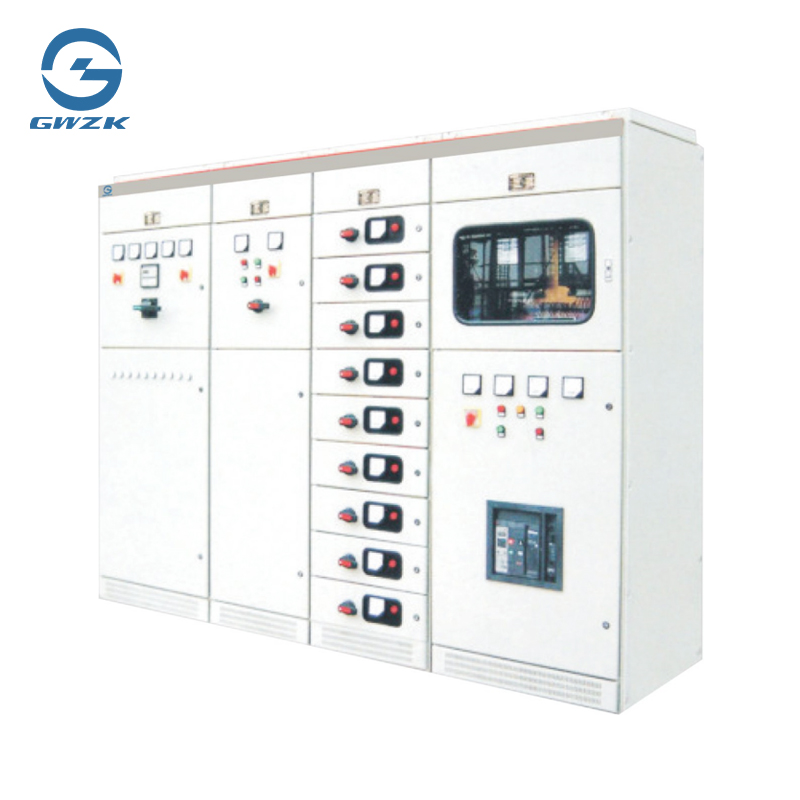
Engineers often use the terms interchangeably, but they represent entirely different infrastructure classes. You must understand these distinctions to avoid costly procurement errors.
Capacity forms the primary dividing line. Distribution boxes typically serve localized, lower-amperage sub-circuits. They handle residential or light commercial loads, usually maxing out around 200 to 400 amps. Conversely, a full Distribution Cabinet handles main power distribution. They manage much higher currents, frequently ranging from 800 amps up to 4000 amps or more. They step down and distribute massive industrial power feeds safely.
Installation methods differ drastically between the two. Distribution boxes generally feature wall-mounted designs. They save floor space and fit easily into small utility closets. Cabinets require floor-standing installations. They weigh hundreds or thousands of pounds. You must secure them directly to concrete slabs using heavy-duty anchoring systems.
Internal architecture reveals the true complexity of these systems. Boxes manage basic branch circuit breakers. They route power to standard outlets and lighting fixtures. Cabinets house complex switchgear. They feature multiple heavy-duty copper busbars. You will also find advanced digital metering, surge suppression systems, and sophisticated ground fault protection relays inside them.
Capacity and Scope Comparison Chart
Feature | Distribution Box | Distribution Cabinet |
|---|---|---|
Amperage Range | Up to 400 Amps | 800 to 4000+ Amps |
Installation Type | Wall-mounted | Floor-standing |
Primary Use Case | Localized branch circuits | Main facility power distribution |
Internal Components | Basic breakers, simple wiring | Complex switchgear, busbars, digital metering |
Actionable Takeaway: Confirm whether your project requires a full heavy-duty cabinet or a simpler localized box. Assess your total incoming amperage feed before issuing purchase orders.
Translating total facility amperage into hardware specifications requires precise engineering. You must size the main breaker to handle peak inrush currents. The internal busbars must also match or exceed this capacity rating. Copper busbars offer superior conductivity, though aluminum serves as a viable alternative in some commercial applications. Modularity plays a massive role in long-term viability. You should evaluate chassis designs closely. Select modular systems allowing technicians to snap in new breakers easily. This prevents complete teardowns during future facility expansions. Modular designs keep downtime to an absolute minimum.
Environmental factors dictate enclosure requirements strictly. You must match the enclosure rating perfectly to the installation environment. Failing to do so invites moisture or dust into sensitive electronics.
Indoor/Clean Environments: Offices and clean manufacturing floors generally require IP20 or NEMA 1 ratings. These provide basic protection against accidental personnel contact and large falling dirt.
Harsh/Industrial Environments: Chemical plants and outdoor installations demand IP65 or NEMA 4/4X ratings. These robust enclosures provide strict protection against directed water ingress. They also block corrosive agents and airborne particulates entirely.
Switchgear generates substantial heat under heavy loads. You must assess total heat dissipation accurately. Standard commercial setups often rely on passive ventilation louvers. However, high-density industrial setups require active cooling needs. You might need to integrate forced-air fans or dedicated HVAC connections. Safety features protect your maintenance personnel directly. Modern designs include strict arc flash mitigation features. Compartmentalization separates different voltage zones physically. Internal safety barriers ensure a technician can work on one section while others remain energized safely.
You cannot compromise on regulatory compliance. Regional safety standards define construction and testing mandates. For North American markets, strict adherence to UL 891 or UL 67 is required. Global markets typically demand IEC 61439 certification. Independent, third-party testing certifications matter immensely. They guarantee long-term reliability under stress conditions. Facility insurance adjusters will ask for these certifications immediately following any electrical incident. Without them, your insurance coverage becomes invalid.
Commercial office buildings have unique infrastructure demands. Space comes at a premium in these environments. Therefore, a compact footprint takes top priority. Aesthetic integration also matters, as panels occasionally sit in visible utility corridors. Advanced sub-metering systems are highly crucial here. Property managers need exact power consumption data for accurate tenant billing. Typical specifications for these spaces include standard NEMA 1 enclosures. They also prioritize high breaker density to maximize the number of distinct branch circuits in a small area.
Manufacturing floors punish electrical equipment continuously. Ruggedization becomes the primary focus. You need high fault-current tolerance to survive aggressive motor startups. Integration alongside motor control centers (MCC) is standard practice. These facilities demand NEMA 12 or NEMA 4 enclosures to block metallic dust and industrial lubricants. Heavy-duty copper busbars handle immense continuous loads. Furthermore, vibration-resistant mounting systems prevent loose connections caused by nearby heavy stamping machinery.
Data centers operate under unforgiving uptime requirements. High-density power distribution forms the backbone of these facilities. Real-time power monitoring integrates directly into facility management software. You must utilize intelligent PDU (Power Distribution Unit) integration. Strict thermal management prevents server room ambient temperatures from spiking. Typical specifications include network-connected digital metering. You will also see redundant power paths (A and B feeds) ensuring continuous operation. Active cooling integration directly on the enclosure helps manage extreme heat dissipation.
Best Practice: Always consult your IT network engineers when specifying data center enclosures. Ensure the communication protocols of the cabinet metering match your existing software dashboards seamlessly.
Selecting a manufacturer requires careful analysis of their production capabilities. You must decide whether a standard off-the-shelf unit suffices. Standard models reduce lead times and keep initial budgets low. However, a custom-engineered solution becomes necessary for complex footprints or unique MCC integrations. You must weigh the associated cost and time trade-offs. Custom engineering adds weeks to the procurement cycle. Assess the vendor's catalog breadth. A strong supplier offers numerous modular add-ons, turning standard units into semi-custom solutions efficiently.
Hardware quality means nothing without proper documentation. You must demand detailed single-line diagrams before accepting delivery. Comprehensive installation manuals prevent onsite contractor errors. Post-sale engineering support is equally vital. When a breaker trips at midnight, your facility team needs immediate technical assistance. Evaluate the vendor's response time during the bidding phase. Ask for sample documentation to verify clarity and engineering depth.
Supply chain lead times frequently disrupt construction schedules. You must factor in delivery realities early in the project. Evaluate a vendor's logistical transparency closely. Do they track their freight accurately? Can they provide verifiable delivery timelines based on current factory workloads? Late deliveries delay entire facility openings. Write financial penalty clauses into procurement contracts for missed delivery dates. This ensures the vendor prioritizes your specific Distribution Cabinet order.
Never accept a generic warranty statement blindly. You must scrutinize the exact terms of the warranty document. Clarify what the manufacturer actually covers. Often, the steel enclosure carries a ten-year guarantee, but internal digital meters only carry one year. Check the availability of replacement parts. A reliable vendor guarantees spare parts availability for at least ten to fifteen years. Lifecycle services, including preventive maintenance contracts, add immense value to your procurement package.
Choosing the right infrastructure requires balancing current electrical demands, environmental realities, and future growth projections. You cannot treat this process as a casual hardware purchase. It requires rigorous load auditing and environmental matching. Remember to prioritize safety standards and independent certifications to protect your personnel and facility insurance. Evaluate vendors based on technical support, robust documentation, and transparent delivery histories. As a final action step, engage a certified electrical engineer. Have them validate your load calculations and physical constraints thoroughly before you request formal RFQs from shortlisted manufacturers.
A: Standard engineering practice dictates 20-30% spare capacity for future expansion. This margin accommodates new machinery or lighting upgrades. It also prevents dangerous thermal risks associated with running internal busbars and breakers at maximum continuous load.
A: The structural steel enclosures can easily last 20 to 30 years or more. However, internal switchgear, breakers, and digital metering may require retrofitting or complete replacement every 10 to 15 years. This depends heavily on operational cycle use and routine maintenance.
A: Generally, no. IP and NEMA ratings depend entirely on structural seals, factory welding, and specialized door gaskets. Adding aftermarket caulk does not guarantee compliance. It is safer and legally compliant to specify the correct environmental rating from the very start.
A: Standard units offer significantly faster delivery and lower procurement budgets for common commercial uses. Custom units are required for unique footprint constraints, specific heavy industrial environments, or complex motor control center integrations where off-the-shelf options simply fail to fit.


