


Views: 0 Author: Site Editor Publish Time: 2026-10-15 Origin: Site


Modern facilities rely heavily on continuous power flow. A modern power distribution cabinet serves as much more than a simple metal enclosure. It acts as the critical node for load management, operational safety, and infrastructure scalability. Facility managers often struggle to balance high-density power requirements against strict safety compliance. Footprint constraints and thermal management realities further complicate this balancing act. You need reliable solutions to keep operations running smoothly.
We provide a pragmatic framework here for evaluating, comparing, and sourcing these essential systems. You will learn how internal configurations dictate thermal efficiency. We will explore how specific applications demand unique enclosure types. You will also discover how strict adherence to global safety standards mitigates operational risk. Whether you manage a commercial building, an industrial plant, or a high-density data center, choosing the right system protects your equipment and ensures long-term reliability.
Performance is tied to configuration: Internal component layout (busbars, PDUs, breakers) directly dictates thermal efficiency and maintenance downtime.
Application defines the enclosure: Selecting between standard models (e.g., XL-21, GGD) or specialized outdoor/telecom units depends strictly on environmental variables and load capacity.
Compliance mitigates risk: Adherence to IEC, NEMA, and local IP rating standards is a non-negotiable baseline for vendor evaluation.
Selecting the right infrastructure directly influences operational success. High-availability environments cannot tolerate unexpected downtime. Continuous manufacturing plants and massive data centers rely entirely on stable power feeds. A properly specified Distribution Cabinet isolates faults efficiently. It prevents cascading failures across your electrical network. When a localized overload occurs, the cabinet ensures only the affected circuit trips. This selective coordination keeps the rest of your facility online. You protect your revenue streams by maintaining continuous uptime.
Thermal management plays an equally crucial role. Poor airflow traps heat inside the enclosure. Elevated temperatures degrade internal components rapidly. Breaker lifespans shorten significantly under constant thermal stress. Localized cooling mechanisms must work harder to compensate. This dynamic wastes energy and strains your facility infrastructure. Efficient cabinets utilize strategic venting and internal layouts. They promote natural convection or integrate active cooling systems. You avoid premature equipment failure by prioritizing proper heat dissipation.
Safety and liability represent massive concerns for facility operators. Modern cabinets mitigate severe risks like arc flashes. An arc flash releases explosive energy. It endangers personnel and destroys adjacent equipment. Robust enclosures contain these blasts safely. Proper grounding mechanisms provide another layer of essential protection. They direct rogue currents safely into the earth. Regulatory compliance requires strict adherence to these safety standards. You protect your workforce and avoid legal liabilities by installing fully compliant enclosures.
Understanding the internal anatomy of a Distribution Cabinet helps you make informed procurement decisions. Each component plays a specific role in overall system stability.
Busbars form the conductive backbone of the enclosure. You must choose between copper and aluminum configurations. Copper offers superior electrical conductivity. It resists oxidation and handles high thermal stress exceptionally well. Aluminum provides a lighter, budget-friendly alternative. However, aluminum degrades faster under continuous heavy loads. It also requires larger cross-sectional areas to match copper's capacity. We recommend copper for high-density, mission-critical applications.
Protective devices guard your downstream equipment. Modularity allows for hot-swapping components without shutting down the entire panel. Molded Case Circuit Breakers (MCCB) handle standard commercial loads efficiently. They offer reliable overcurrent and short-circuit protection. Air Circuit Breakers (ACB) handle much larger fault currents. You will typically find ACBs at the main incoming feed of large industrial cabinets. Selecting the right breaker type ensures accurate fault isolation.
Basic panels simply route electricity. Modern environments require intelligent monitoring. Smart and metered PDUs bridge this gap effectively. They track voltage, current, and power consumption in real time. Facility managers gain granular visibility into power usage down to the individual outlet. You can identify stranded capacity or unbalanced phases immediately. This data empowers you to optimize your entire power infrastructure.
The external shell must withstand harsh conditions. Manufacturers use varying gauges of steel or aluminum. Thicker metal gauges provide necessary structural support for heavy internal components. Anti-corrosion treatments prevent rust in humid or coastal environments. Powder-coated finishes offer excellent durability against physical impacts. The physical integrity of the enclosure guarantees long-term protection for your sensitive electrical gear.
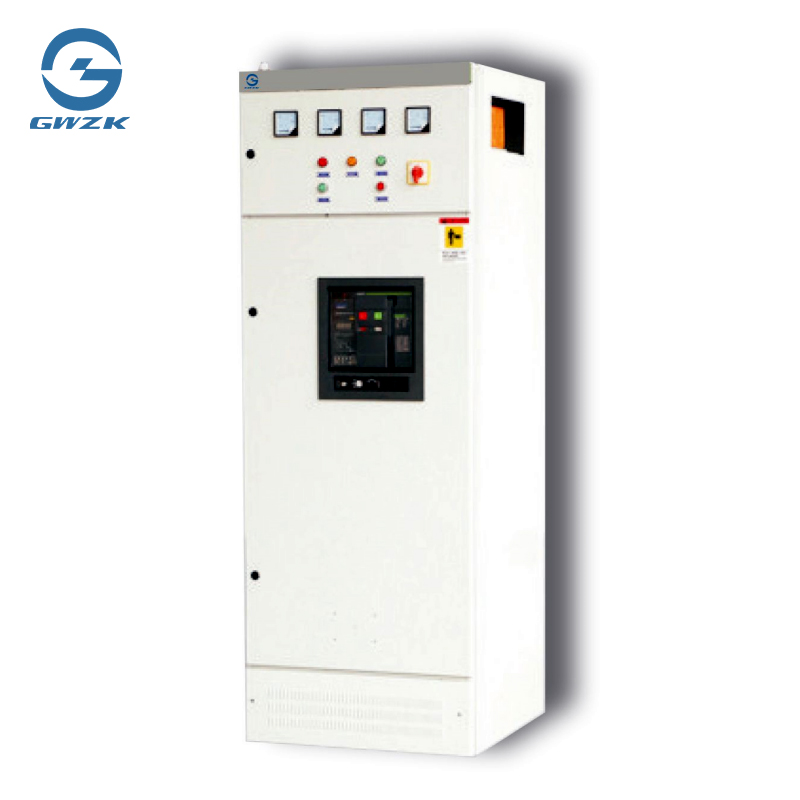
Different applications require different structural designs. A one-size-fits-all approach routinely fails in complex electrical engineering. You must align the cabinet type directly with your environmental variables and capacity demands.
Industrial settings frequently utilize XL-21 and GGD models. The XL-21 represents a fixed-mounted, low-voltage solution. It works perfectly for straightforward lighting and power distribution. The design saves floor space and simplifies installation. Conversely, the GGD model serves broad power plants and massive substations. It features a draw-out design. Maintenance teams can remove and replace individual breaker modules safely. GGD units boast much higher short-circuit withstand strength. They also incorporate superior ventilation pathways for heavy AC loads.
IT infrastructure demands highly specialized enclosures. Data center cabinets prioritize massive cable density. They feature integrated airflow containment systems. These cabinets separate hot exhaust air from cold supply air. They also house vertical zero-U smart PDUs. Outdoor telecom cabinets face entirely different challenges. They sit fully exposed to harsh weather. These units focus on extreme ingress protection. They often feature vandal-resistant multipoint locks. Many include self-contained HVAC or Peltier cooling modules to regulate internal temperatures independently.
Distribution Cabinet Configuration Comparison
Configuration Type | Primary Application | Key Structural Features | Typical Environment |
|---|---|---|---|
XL-21 | General Power & Lighting | Fixed internal mounting, compact footprint | Commercial buildings, light industrial |
GGD | Substation & Heavy Power | Draw-out modules, high fault tolerance | Power plants, heavy manufacturing |
Data Center Cabinet | Server & IT Infrastructure | Cable management rails, airflow containment | Climate-controlled server rooms |
Outdoor Telecom | Remote Communication | Vandal resistant, active cooling, sealed shell | Cell towers, harsh outdoor settings |
Sourcing electrical infrastructure requires rigorous evaluation. Relying purely on basic dimensions or assumed capacities often leads to disastrous implementation delays. Use these dimensions to evaluate potential solutions.
Electrical loads rarely decrease over time. Facilities expand, and equipment density grows. You must evaluate spare physical capacity inside the enclosure. Count the available rack units and empty breaker slots. Ensure the cabinet provides adequate thermal headroom. A fully loaded panel generates significantly more heat than a partially loaded one. Planning for a 20-30% growth margin prevents costly premature upgrades.
The installation environment dictates the required physical defenses. NEMA and IP ratings classify an enclosure's ability to block contaminants. Dust, moisture, and chemical exposure destroy unprotected electrical components. Map your site conditions accurately. A standard indoor room requires minimal ingress protection. A washdown area in a food processing plant demands high-grade waterproof sealing. Match the rating to your specific reality.
Unauthorized access poses severe safety and security risks. Evaluate the physical locking mechanisms on the enclosure doors. Multi-point locking systems prevent doors from being pried open. High-security environments integrate access control directly into the facility network. You can implement biometric scanners or RFID badge readers on cabinet handles. This ensures only qualified technicians interact with live electrical components.
Never compromise on documented safety standards. Verify all UL, CE, or IEC testing data before purchasing. These certifications prove the cabinet passed rigorous stress tests. Demand full transparency during the procurement phase. Ask vendors for comprehensive Factory Acceptance Testing (FAT) reports. These reports confirm the specific unit functions correctly before it leaves the manufacturing floor.
Procuring a high-quality Distribution Cabinet represents only half the battle. Physical installation and final commissioning present unique engineering challenges. Anticipating these hurdles guarantees a smoother deployment.
Thick industrial power cables do not bend easily. You must anticipate top versus bottom entry constraints early in the planning phase. If cables enter from the bottom, the cabinet needs sufficient internal clearance. Forcing a tight bend radius damages cable insulation. It creates micro-fractures that eventually cause catastrophic arcing. Ensure the internal layout accommodates sweeping cable paths.
Electrical enclosures hold massive amounts of copper and steel. A fully loaded unit becomes incredibly heavy. Floor loading capacities require strict attention. This matters particularly in raised-floor data center environments. The floor tiles and underlying support pedestals must handle the concentrated point load. Structural engineers should verify floor strength before you position the equipment.
Retrofitting modern equipment into legacy electrical rooms rarely goes perfectly. Older buildings feature low ceilings and tight corridors. You might struggle to physically maneuver the cabinet into place. Code violations frequently occur regarding clearance space. Safety regulations mandate specific working distances in front of live panels. You must map the existing room topography to ensure the new footprint complies with all local clearance codes.
Moving from evaluation to actual procurement requires a structured approach. Engineering and purchasing teams must align their priorities. Follow these steps to streamline your selection process.
Define the Load Profile: Document all current continuous loads accurately. Do not rely on estimates. Calculate a strict 20-30% future growth margin. This creates your absolute baseline requirement.
Assess Vendor Engineering Support: Prioritize manufacturers offering deep technical assistance. Look for vendors who provide detailed single-line diagrams. They should offer thermal modeling services and customization capabilities. Avoid pure off-the-shelf distributors if your project involves complex variables.
Standardize vs. Custom Build: Weigh your timeline against your technical needs. Bespoke enclosures fit your exact specifications perfectly. However, they require extensive lead times. Standard commercial units offer immediate availability. You might need to accept minor compromises in layout or footprint to gain that speed.
These distinct steps eliminate guesswork. They force cross-functional teams to agree on technical specifications before contacting suppliers. You ensure the final product meets both engineering standards and deployment deadlines.
Specifying a power infrastructure system is fundamentally an exercise in risk management. You future-proof your facility by choosing highly adaptable enclosures. We encourage all buyers to align physical cabinet specifications tightly with internal component requirements. You must also account for site-specific environmental realities to prevent premature hardware failure.
Take immediate action to secure your operational uptime. Audit your current electrical single-line diagrams today. Identify potential bottlenecks and aging equipment. Consult directly with certified panel builders or infrastructure engineers. They will help you match your load profiles to the ideal enclosure architecture. A proactive approach guarantees your facility remains powered, safe, and ready for future expansion.
A: A distribution board typically mounts directly to a wall. It handles smaller, localized electrical loads for specific zones. A distribution cabinet is a large, freestanding enclosure. It manages significantly higher power capacities and serves as a centralized distribution hub for entire facilities or heavy industrial systems.
A: Evaluate your exact environmental exposure. Choose IP54 for standard, semi-covered outdoor placements. Select IP65 if the unit faces direct rain and heavy windblown dust. Opt for IP66 or IP67 ratings for extreme marine environments or areas subject to heavy industrial washdowns.
A: Yes, but retrofitting requires careful planning. You must verify physical dimensions first. Smart PDUs often utilize a vertical Zero-U form factor. Ensure the standard cabinet has mounting brackets and sufficient depth. You must also recalculate thermal loads, as smart units introduce additional heat.
A: The metal enclosure itself easily lasts 20 to 30 years under normal conditions. However, internal switchgear, breakers, and active cooling components deteriorate faster. These internal parts typically require lifecycle replacements or heavy maintenance every 10 to 15 years, depending on environmental stress and cycle frequency.


