


Views: 0 Author: Site Editor Publish Time: 2026-11-05 Origin: Site


Procuring electrical infrastructure carries incredibly high stakes. Choosing the right Distribution Cabinet is not merely a routine purchasing task. It represents a critical facility risk management decision. When you select an inadequate enclosure, system failures quickly follow. These inevitable failures lead directly to severe compliance violations. You will also experience thermal degradation and catastrophic facility downtime. Such disruptions cripple operations and compromise worker safety. We must treat this selection process using strict engineering rigor. This article provides an objective, engineering-focused breakdown of modern cabinet types. You will discover their exact industrial applications across various sectors. We also present a verifiable framework for evaluating system scalability and environmental performance. By understanding these technical baselines, you can confidently protect your facility against devastating power disruptions.
Requirement Mapping: Matching the cabinet type (Low Voltage, Medium Voltage, or Motor Control Center) strictly to facility load limits and fault-current ratings is non-negotiable.
Environmental Ratings: Selecting the correct NEMA or IP rating dictates long-term viability; over-specifying wastes budget, while under-specifying guarantees premature failure.
Scalability vs. Cost: Modular, draw-out designs carry a higher upfront cost but significantly reduce future downtime during expansions or maintenance.
Compliance: Verifiable adherence to UL 891 or IEC 61439 standards is required for insurance and operational legality.
Every successful electrical upgrade begins following a precise operational assessment. You must first identify your primary objective clearly. Are you replacing aging infrastructure inside an old factory? Perhaps you need to scale up a high-density data center. Alternatively, you might be outfitting an entirely new industrial plant. Each scenario demands distinctly different power routing strategies. You cannot treat a telecom data center expansion like a rugged mining facility upgrade.
Next, define your success criteria using objective engineering baselines. You must establish rigorous technical parameters before consulting manufacturers. We recommend evaluating the following key metrics:
Required Continuous Current: Determine the maximum sustained amperage the system must handle daily.
Short-Circuit Withstand Ratings: Calculate the fault current limits the enclosure must survive safely.
Footprint Limitations: Measure the exact physical dimensions available within your electrical room.
Maintenance Access Requirements: Establish required clearance zones for safe technician entry and annual servicing.
Finally, evaluate the fundamental trade-offs comparing standard and custom enclosures. Off-the-shelf standardized models offer excellent delivery timelines. They often present highly efficient procurement paths for common commercial applications. Conversely, custom-built enclosures require intense engineering resources and reviews. They often experience much longer manufacturing cycles. However, custom designs solve complex spatial restrictions or highly specific busbar routing challenges.
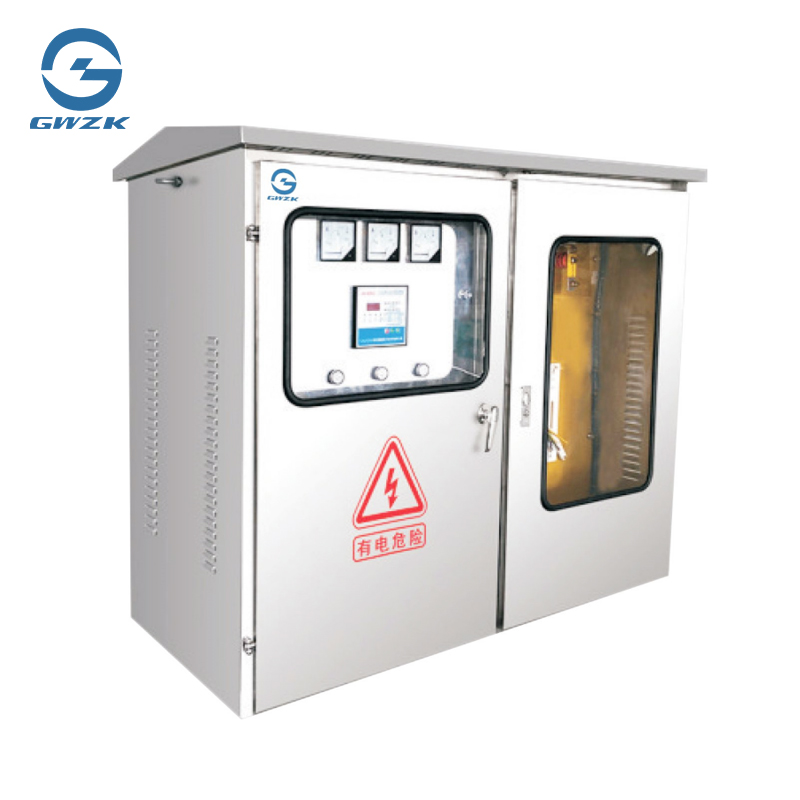
We classify these structural enclosures by their functional application and voltage thresholds. Understanding these core differences prevents critical mismatch errors during early facility planning. Let us examine the four primary categories dominating the industrial landscape today.
Commercial buildings and light manufacturing facilities heavily rely on these specific units. Multi-tenant properties also deploy them for reliable energy routing. A typical low-voltage Distribution Cabinet prioritizes space efficiency. It routes power effectively through standard commercial grid connections.
These units often utilize molded case circuit breakers (MCCBs). Manufacturers build them using highly standardized internal templates. This standardization allows quick installation and exceptionally simple maintenance. They provide basic power distribution functions. They do not require complex arc-resistant compartmentalization. Facility managers generally appreciate their compact physical footprint.
Application: Commercial buildings, light manufacturing, and multi-tenant facilities.
Key Feature: Often utilizes molded case circuit breakers (MCCBs); highly standardized, prioritizing space efficiency.
Utility substations and heavy industrial plants require robust medium-voltage solutions. Large-scale renewable energy tie-ins also depend on this heavy infrastructure. High-energy faults at this higher voltage level carry catastrophic physical risks. Therefore, these specialized enclosures demand strict isolation protocols.
MV units focus heavily on specialized arc-resistant designs. They often feature gas-insulated compartments. These compartments suppress dangerous electrical arcs instantly. Physical isolation barriers separate individual components securely. This compartmentalization prevents a single internal fault from destroying the entire system. Technicians rely completely on these advanced safety features during routine maintenance.
Application: Utility substations, heavy industrial plants, and large-scale renewable energy tie-ins.
Key Feature: Focuses heavily on arc-resistant designs, gas-insulated compartments, and physical isolation.
Water treatment plants and heavy manufacturing facilities utilize Motor Control Centers daily. Conveyor systems also require these centralized automation command units. An MCC houses critical motor management hardware in one secure location.
The defining feature of an MCC is its centralized modular housing. It holds motor starters and variable frequency drives (VFDs) securely. Programmable controllers also reside directly within these specialized bays. An MCC emphasizes plug-and-play modularity above all else. Technicians can execute rapid swapping of faulty component buckets. This modular approach keeps complex industrial assembly lines running smoothly.
Application: Water treatment plants, conveyor systems, and heavy manufacturing.
Key Feature: Centralized housing for motor starters, VFDs, and programmable controllers; emphasizes plug-and-play modularity.
Data centers and telecom infrastructure demand specialized network power enclosures. These unique environments face immense thermal challenges. They also require incredibly dense cabling routing. Standard industrial enclosures simply cannot meet these demands.
A high-density network cabinet integrates intelligent power distribution units (PDUs). It features specialized thermal management systems built-in. For example, they maintain perfect compatibility alongside hot and cold aisle containment strategies. Furthermore, they incorporate stringent cable management features. Proper cable routing prevents critical airflow blockages. This prevents subsequent hardware throttling or server failure.
Application: Data centers and telecom infrastructure.
Key Feature: Integration of intelligent PDUs, specialized thermal management, and stringent cable management.
Table: Technical Specifications Summary
Cabinet Type | Primary Environment | Typical Internal Components | Key Structural Priority |
|---|---|---|---|
Low-Voltage (LV) | Commercial / Light Industrial | MCCBs, Busbars | Space Efficiency |
Medium-Voltage (MV) | Substations / Heavy Industrial | Vacuum Breakers, Gas Insulation | Arc-Resistance |
Motor Control Center (MCC) | Manufacturing / Water Treatment | VFDs, Motor Starters, PLCs | Modularity / Quick Swap |
IT / Network Power | Data Centers / Telecom | Intelligent PDUs, Sensors | Thermal / Cable Management |
Choosing the correct enclosure requires analyzing your physical surroundings carefully. Environmental ratings define how well the unit resists dust, water, and corrosion. You must specify the appropriate protection level.
Commercial office towers and standard cleanrooms represent highly controlled environments. Baseline requirements here usually specify NEMA 1 or NEMA 2 ratings. Under European IEC standards, this roughly translates to IP20. These basic ratings offer sufficient protection against solid objects and minor moisture drips.
In clean indoor environments, thermal dissipation takes priority over strict ingress protection. Highly sealed cabinets trap dangerous heat internally. If you do not require heavy water protection, choose well-ventilated designs. Proper ambient ventilation prolongs the lifespan of internal breakers significantly.
Marine terminals and corrosive chemical plants present severe environmental threats. Outdoor installations mandate NEMA 3R, 4, or 4X ratings. These correspond to IP54 through IP66 standards. NEMA 3R protects internal components against falling rain and exterior ice formation. NEMA 4X adds rigorous protection against highly corrosive chemical agents.
Material selection becomes vital in these demanding settings. Powder-coated carbon steel works reasonably well for standard outdoor environments. However, marine applications strictly demand 316L stainless steel structural panels. This marine-grade alloy resists corrosive salt spray easily. Using inferior materials in corrosive zones guarantees rapid structural failure.
Some geographic regions experience frequent seismic activity. Heavy vibration applications face similar structural degradation challenges. Mining operations represent a prime example. These harsh zones require specialized structural reinforcements.
You must verify International Building Code (IBC) seismic certifications carefully. A standard enclosure will warp under intense physical shaking. Seismic-rated units feature heavily reinforced interior gussets. They also include heavy-duty floor anchoring points. These structural enhancements ensure the internal busbars remain securely aligned during tremors.
We must evaluate physical features against real-world operational outcomes. A successful specification process maps every structural choice to a measurable technical benefit. Do not select features randomly.
Consider the immense impact of modularity on facility maintenance schedules. You must choose between fixed-mount and draw-out breakers. Fixed-mount breakers require complex unbolting during replacement procedures. Draw-out options slide out easily using specialized internal rails. This draw-out design reduces the mean time to repair (MTTR) dramatically. However, draw-out configurations require deeper cabinet footprints to accommodate the rails.
Cable entry configurations also dictate your overall facility layout. Top-feed configurations work exceptionally well alongside overhead cable trays. Bottom-feed designs integrate perfectly alongside raised floors or deep facility trenching. Mismatching your structural feed configuration forces major physical facility modifications later.
Excess heat destroys sensitive internal electrical components rapidly. You must carefully design the thermal management strategy. Active ventilation uses powered exhaust fans or dedicated cooling units. Passive ventilation relies solely upon natural convection and exterior louvered panels.
Relying on natural convection is entirely insufficient for high-load VFD cabinets. Variable frequency drives generate immense, concentrated thermal loads. This trapped heat causes catastrophic component failure quickly. You must demand verifiable cooling specifications from the cabinet manufacturer directly.
Protecting your maintenance personnel remains an absolute engineering requirement. You must specify modern arc flash mitigation technologies. Maintenance switches temporarily lower trip thresholds to protect workers near the equipment. Infrared viewing windows allow thermal inspections externally. Technicians perform these inspections without opening energized doors.
Always verify compliance through recognized regulatory standards. Ensure the equipment carries appropriate UL, ANSI, or IEC certifications. Independent laboratory testing confirms the enclosure actually meets its stated fault ratings. Never install non-certified equipment.
Procurement extends far beyond simply writing technical specifications. You must navigate real-world physical installation hurdles. You must also manage complex material sourcing challenges effectively.
Deploying heavy electrical infrastructure introduces significant physical facility risks. You must evaluate floor-loading constraints before moving equipment inside. A fully loaded unit easily cracks an unsupported concrete slab. Rigging and hoisting requirements demand careful logistical planning beforehand.
Site-prep dimensions often mismatch the delivered hardware specifications. A concrete housekeeping pad might measure two inches too short. Overhead structural clearances might unexpectedly block top-mounted ventilation fans. We prevent these common bottlenecks through rigorous pre-installation site surveys.
Global material availability dictates your project timelines heavily. Raw material tariffs on imported steel alter manufacturing schedules unpredictably. Supply chain shifts disrupt standard delivery expectations continually. You must adapt your planning accordingly.
You must build realistic timing buffers into your construction schedule. Assume a 12 to 24-week lead time for complex non-standard builds. Expediting custom engineering is rarely possible. Fast-tracking often compromises mandatory factory safety testing.
We must evaluate how the structural design affects long-term physical upkeep. Component degradation accelerates rapidly under poor thermal management designs. Unchecked dust accumulation causes devastating electrical tracking across the insulators.
Prioritize designs that facilitate extremely easy cleaning protocols. Removable side panels simplify annual maintenance access greatly. High-quality heavy-duty door gaskets prevent fine dust from penetrating the internal compartments. Proper sealing ensures the internal hardware reaches its maximum intended lifespan.
Electrical infrastructure demands precise engineering knowledge and strategic foresight. Following a logical evaluation framework prevents disastrous specification errors.
Your internal decision matrix must follow a strict sequential hierarchy. First, determine the necessary electrical load capacity. Next, establish the mandatory environmental protection rating. Then, evaluate the specific form factor and footprint limitations. Finally, secure rigorous regulatory compliance verification before placing an order.
We strongly advise conducting a comprehensive facility site energy audit immediately. You should consult a certified electrical engineer before finalizing specifications. Ensure your chosen hardware matches your facility capabilities exactly. Contact our technical engineering team today. Request detailed product datasheets or schedule an extensive engineering consultation.
A: Cabinets are typically freestanding, fully enclosed structures designed for handling higher electrical capacities. They feature deep internal compartmentalization. Boards are often smaller, wall-mounted panels. Facilities use standard boards for localized, low-capacity circuit branching.
A: Indoor clean environments generally require basic NEMA 1 or 2 ratings. Standard outdoor installations need NEMA 3R to repel falling rain. Heavy industrial washdown zones demand NEMA 4. Corrosive atmospheres require strict NEMA 4X protection. Always evaluate your specific atmospheric corrosiveness first.
A: Yes, but it requires careful spatial pre-planning. Retrofitting current transformers (CTs) and potential transformers (PTs) demands physical internal clearance. Smart meters also require dedicated door mounting space. If you lack physical room, retrofit options become impossible.
A: Off-the-shelf commercial products usually ship within 2 to 4 weeks. Highly engineered medium-voltage switchgear often requires 12 to 24 weeks. Custom engineering, specific material sourcing, and mandatory factory acceptance testing drive these longer production schedules.


