


Views: 0 Author: Site Editor Publish Time: 2026-10-29 Origin: Site


Misidentifying electrical distribution equipment introduces massive operational risks into facility management. You might inadvertently over-engineer your infrastructure. You could easily under-specify critical load protections instead. These common design errors trigger severe real-world consequences. Facilities frequently face dangerous arc flash incidents. Safety non-compliance quickly shuts down daily operations. Unexpected network downtime ruins overall facility productivity. You must understand equipment differences thoroughly.
Both system types actively route power safely. They both protect vital branch circuits. However, they occupy vastly different tiers in your electrical network topology. They differ strictly in voltage handling limits. They feature vastly different fault current capacities. Their physical architectures do not match. You cannot treat them as interchangeable assets. Misplacing them disrupts power stability immediately.
We provide a definitive, engineering-aligned framework below. Facility managers will learn to evaluate network tiers accurately. Procurement teams will discover how to match hardware to specific load demands. You will confidently select the correct equipment for every single application. We help you build a safer, more resilient electrical infrastructure.
Topology Position: Switchgear acts as the primary service entrance and main load center; the distribution cabinet serves as the localized, downstream branch circuit manager.
Capacity Limits: Switchgear is engineered for high-voltage/high-current applications (often utilizing draw-out air circuit breakers); a distribution cabinet manages low-voltage distribution (typically under 1000V) using molded case (MCCB) or miniature (MCB) breakers.
Maintenance & Safety: Switchgear allows for compartmentalized maintenance to isolate faults without killing main power; distribution cabinets generally require total power-downs for safe servicing.
Cost Implications: Over-engineering a downstream node with switchgear introduces unnecessary footprint and cost multipliers.
Switchgear sits at the absolute top of your facility power hierarchy. Its primary function involves receiving raw utility power directly. It also accepts emergency generator output during grid failures. The system then safely divides this bulk energy. It routes massive power into major sub-networks. This acts as the main gatekeeper for your entire facility.
These primary units possess specific high-performance characteristics. They handle extreme fault-current capabilities effortlessly. Some heavy models routinely manage up to 100kA or more. Manufacturers utilize heavy-duty, draw-out components inside these large enclosures. Air Circuit Breakers (ACBs) enable rapid component swap-outs during emergencies. Heavy metal encloses the entire system tightly on all sides. This metal-clad architecture ensures extremely high arc-flash containment.
Engineers deploy this heavy equipment in highly demanding environments. You rarely see them in light commercial spaces. They support massive, continuous energy draws safely. Facility planners rely on them to prevent catastrophic grid-level failures. We typically see these units deployed in the following environments:
Heavy industrial processing plants
Data center main power feed rooms
Large-scale automotive manufacturing zones
Municipal utility substations
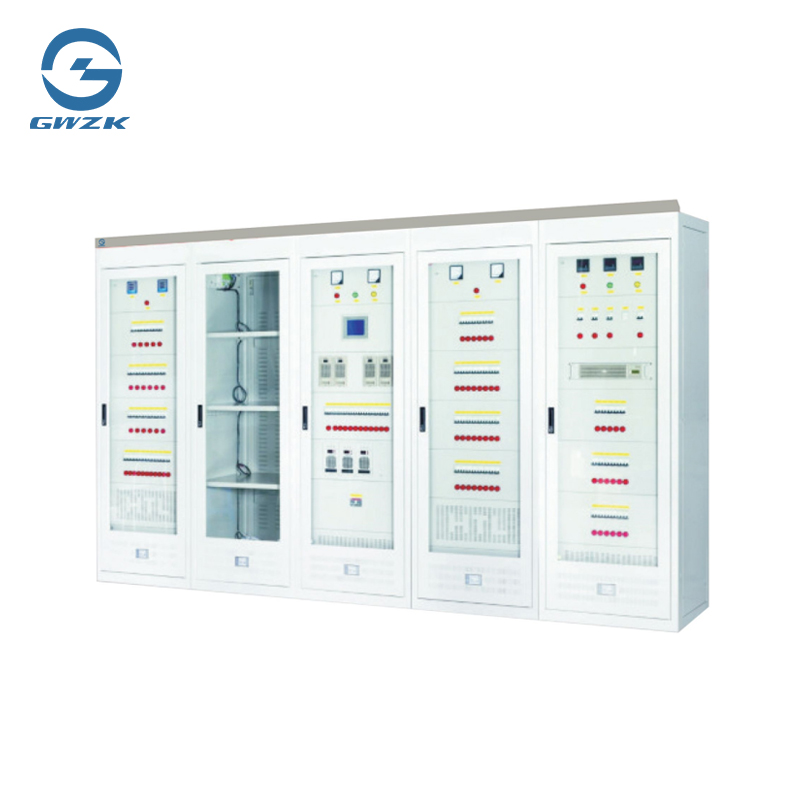
A specialized downstream manager takes over after the initial power split. This vital secondary function defines the typical Distribution Cabinet. It takes the stepped-down, segmented power from the main switchgear. It then routes this energy directly to final end-use loads. These end-use loads include overhead lighting systems. They also power HVAC units and localized production machinery.
We observe several distinct mechanical characteristics in these panels. Engineers design them strictly for low-voltage routing applications. They typically operate at 600V or significantly below. This operating range depends on specific IEC or NEMA standards. They utilize permanent, fixed-mount circuit breakers exclusively. You will commonly find MCCBs or MCBs populated inside them.
They feature space-saving, highly compact footprints. Operators often mount them directly onto facility walls. Some models utilize small floor-standing designs. This physical agility makes them incredibly versatile. Typical use cases include commercial building electrical utility rooms. You also see them distributed across large retail store spaces. Localized factory floor zones rely heavily on them. Large corporate office buildings use them as floor-level sub-panels.
Electrical engineers define strict operating boundaries between these two systems. Medium or High Voltage applications over 1kV dictate heavy switchgear usage. Low Voltage applications under 1kV usually dictate a robust Distribution Cabinet. You must always respect these strict electrical thresholds. Pushing low-voltage gear beyond its rating invites disaster.
You must also carefully compare short-circuit interrupting ratings. Switchgear handles massive, sudden utility grid surges. It breaks circuits safely during extreme energy spikes. Cabinets handle standard localized faults. They trip when a specific branch overloads. They cannot absorb utility-level lightning strikes or grid failures.
Fault current ratings vary significantly. Heavy gear features massive copper busbars. These thick busbars withstand extreme electro-mechanical forces. Downstream panels use much thinner busbars. They rely on upstream primary gear to block the largest surges.
Physical space constraints dictate many critical facility design choices. Switchgear demands a heavy, massive structural footprint. Operators need both rear and front access for safe maintenance. You must leave wide walkways around the entire assembly. This consumes valuable square footage rapidly.
Conversely, a Distribution Cabinet offers a front-accessible layout. Its compact nature saves considerable facility real estate. You can tuck them into shallow utility closets. You can mount them flush against structural pillars.
Facility planners must address floor-loading requirements carefully. Heavy gear requires deeply reinforced concrete mounting pads. Standard wall-mounted panels do not require structural floor reinforcement. This physical difference heavily influences initial facility architectural plans.
Power isolation capabilities differ drastically between the two designs. Switchgear features extensive internal physical compartmentalization. You can isolate specific faults without dropping the whole facility network. You can service one bay while others remain energized. This keeps critical operations running.
A standard panel relies heavily on a single common bus architecture. You usually must shut off the main breaker entirely. This forces a complete power-down for safe repairs. Technicians cannot safely swap breakers on a live common bus. This causes localized downtime.
Mean Time to Repair (MTTR) impacts daily operations directly. Draw-out breakers allow faster equipment swaps. Technicians simply roll the heavy breaker out. Fixed-mount breakers take longer to replace physically. Technicians must unbolt them from the live bus manually.
Equipment Capability Comparison
System Parameter | Primary Switchgear | Downstream Panel Manager |
|---|---|---|
Standard Voltage Tier | Medium to High (>1kV typical) | Low Voltage (<1kV typical) |
Primary Breaker Type | Draw-out (ACB) | Fixed-mount (MCCB / MCB) |
Physical Access Needs | Front and Rear usually required | Front access only |
Enclosure Material | Heavy metal-clad steel | Standard gauge sheet metal |
Typical Fault Capacity | 65kA to 150kA+ | 10kA to 65kA |
Rigorous safety frameworks dictate equipment manufacturing and facility deployment. You must map your chosen hardware to relevant safety standards. Global international installations often reference IEC 62271 for heavy primary gear. They reference IEC 61439 for downstream low-voltage panel assemblies. These documents provide strict testing methodologies.
North American engineering projects rely heavily on UL standards. Engineers specify UL 891 and UL 1558 frequently. These specific standards ensure structural enclosure integrity under heavy load. They mandate rigorous short-circuit testing before factory shipping. Using non-compliant gear violates local building codes immediately.
Arc flash mitigation requires serious, ongoing engineering attention. Each equipment type handles thermal and explosive risks differently. Heavy gear uses reinforced metal cladding to redirect blast energy upward. This protects technicians standing directly in front. Smaller downstream units rely on rapid breaker tripping mechanisms. They clear faults before catastrophic explosions can form.
Environmental enclosure ratings also drive hardware selection heavily. A heavy-duty Distribution Cabinet often carries varying localized environmental ratings. You might specify NEMA 1, 3R, or 4X enclosures. These specific ratings survive dust, heavy rain, or highly corrosive areas. Conversely, primary switchgear usually requires highly controlled, climate-regulated electrical rooms. You cannot easily place massive primary gear outdoors.
Evaluating implementation risks ensures smoother, uninterrupted facility operations. We must compare initial installation labor against long-term operational workflows. Installing heavy-duty primary equipment requires specialized heavy rigging. You often need large cranes and specialized moving crews. The installation window demands extensive, highly coordinated downtime planning.
Downstream panel installation moves much faster. Standard electricians can mount these units using basic hand tools. This maintenance requires less intensive facility coordination. You can swap a downstream panel over a single weekend.
Beware the inherent risk of over-specifying hardware capabilities. You might deploy massive main switchgear unnecessarily in a small zone. A properly sized Distribution Cabinet often meets all safety requirements perfectly. Over-engineering wastes valuable physical floor space. It also deeply complicates your daily operational workflows.
Future-proofing and network scalability deserve careful engineering evaluation. Facility managers eventually need to add new localized circuits. Adding a small breaker to a standard panel represents simple maintenance. You simply snap in or bolt on a new MCCB. Expanding massive primary switchgear requires significant engineering oversight. You must completely redesign room layouts. You must also update major facility arc-flash studies.
Selecting the right hardware demands a highly methodical approach. Guessing leads to severe safety vulnerabilities. Follow these specific steps to evaluate your infrastructure needs accurately.
Audit the Load Profile: Calculate your peak facility load accurately. Determine your exact system voltage requirements. Identify the required fault-current interrupting capacity. You must know your numbers before calling vendors.
Determine Network Location: Identify the specific physical node. Does the hardware sit exactly at the main utility feed? If so, select heavy switchgear. Does it sit at a localized sub-panel branch point? A robust Distribution Cabinet fits this localized role perfectly.
Space and Maintenance Constraints: Evaluate the physical utility room size. Check your structural concrete floor weight limits. Determine your acceptable downtime limits for routine maintenance. Primary gear needs massive space and heavy floors.
Vendor Shortlisting: Verify manufacturer credentials thoroughly. Ensure they provide fully tested factory assemblies. Their products must comply strictly with local IEC, UL, or NEMA codes. Ask for detailed factory acceptance testing records.
Following this framework eliminates dangerous guesswork. You align your hardware directly with your load profile. You protect your technicians from unexpected electrical hazards.
Switchgear consistently acts as the heavy-duty gatekeeper of facility power. It handles massive utility feeds effortlessly. It redirects destructive fault currents safely away from sensitive areas. The Distribution Cabinet operates as the agile, localized downstream load manager. It routes stepped-down energy directly to your critical end-use devices. Proper selection ensures optimal safety and layout efficiency.
Specifiers should always consult a licensed electrical engineer first. You must run a comprehensive short-circuit study. You also need a thorough breaker coordination study. Complete this crucial engineering step before issuing any final RFQ. Accurate baseline studies prevent dangerous under-sizing errors. They keep your facility compliant with strict safety codes.
We actively encourage you to review supplier product catalogs thoroughly. Contact technical sales teams for professional equipment sizing assistance. Expert engineering guidance guarantees you select the ideal panel. You will build a safer, highly resilient electrical distribution network.
A: Yes, you can use one as main service equipment. This applies primarily to much smaller commercial applications. The facility load and utility fault currents must remain sufficiently low. They must fully meet local building codes. However, a larger switchboard usually handles main service duties more effectively.
A: Switchboards are typically floor-mounted, open-frame structures. They handle much larger continuous currents than standard enclosed panels. They essentially bridge the capacity gap between smaller sub-panels and massive switchgear assemblies. Enclosed panels offer smaller, wall-mounted footprints for localized branch loads.
A: No, they are absolutely not interchangeable. Switchgear utilizes specialized, heavy-duty draw-out breakers. These massive components handle extreme utility voltages. Standard panels rely on standardized molded-case or miniature breakers. The physical sizes and internal mounting mechanisms differ completely.
A: You should perform standard preventive maintenance annually on standard panels. This includes basic visual checks and thermal thermographic scans. Switchgear demands more rigorous multi-year comprehensive tear-downs. You must clean, lubricate, and test heavy draw-out mechanisms regularly.


